Team Nomad

  • Home
  • About Us
  • Categories
    • Backpacking
    • City Breaks
    • Far Away Places
    • Tips
    • UK Activities
Contact Us
  • I’m Crap with Photography – But a Good Camera makes all the Difference!

    I’m Crap with Photography – But a Good Camera makes all the Difference!

    I’m not great with photography. I’m not sure if it’s a patience thing, or a lack of creativity thing. Can I just not be bothered to line up the perfect shot, or am I just unable to see the perfect shot?

    Steve’s really good at stuff like that though. In fact, he’s started an Instagram account for our family and friends, and is deliberately trying to take really cool photos to see if he can get more likes than the last photo posted. Small things and small minds, hey?!

    Me, I’ve taken to taking photos of Steve taking photos, just to amuse myself. Here’s a little sample of my favourites!


    Steve photographing a monkey in Malaysia
    Steve photographing a monkey in Malaysia


    Photographing hippos in Chiang Mai zoo.
    Photographing hippos in Chiang Mai zoo.


    And, finally, photographing the Petronas Towers in Kuala Lumpur.
    And, finally, photographing the Petronas Towers in Kuala Lumpur.

    But I do believe you can get some really smashing pics out of a really good camera, even if, like me, you’re not all that knowledgeable on photography! And, despite the camera on your trusty old smartphone being high quality, that’s not the main function of a phone, and a proper camera is always best. Check out one of these four options:

    · Point-and-shoot camera (around $200), easy to use and high-quality images.

    · DSLR (around $550), a fancier camera with better images.

    · Mirrorless (around $500), in between the two above.

    · GoPro (around $400), for the truly action-packed trip.

    If you’re a beginner photographer and are fine with that, the point-and-shoot and the GoPro have the shortest learning curves. Up for some learning? DSLR and mirrorless cameras have automatic settings to get you started, but you’ll need to experiment and practice in order to perfectly capture that sunset.

    If you’re accident-prone or expecting to need a tough camera, the GoPro is your best bet. Point-and-shoots can handle a drop onto a soft surface but won’t hold up if dropped on a hard surface. DSLR and mirrorless cameras are both pretty fragile, although mirrorless cameras are very slightly less likely to break. Traveling light? The point-and-shoot and the GoPro are both small and easy to tote around. DSLR and mirrorless cameras both have lenses that you might want to carry with you, and DSLRs are fairly big and heavy, while mirrorless cameras are about the size of a point-and-shoot.

    For the best picture quality, DSLRs and mirrorless cameras have big sensors and interchangeable lenses for very high quality still images. Point-and-shoots also have pretty great image quality, and while it can be tricky to adjust the exposure and white balance right with GoPros, they take really amazing time lapses. The battery life on your point-and-shoot will last you about 190-250 pictures, and DSLRs can shoot still images all day without a recharge. Mirrorless cameras run out of battery incredibly quickly, and GoPros can handle about 2.5 hours of continuous video shooting before dying.

    No matter what your trip entails, you’ll want to capture every moment- and for that, you’ll need the perfect travel camera for the occasion. Say Cheese!

    types-of-camera-for-travel


    Becky

    November 9, 2014
    Backpacking, City Breaks, Far Away Places
  • Something for Everyone: Why Austria Ticks all the Boxes for Every Skier

    Something for Everyone: Why Austria Ticks all the Boxes for Every Skier

    The fantastic thing about the Austrian Alps as a skiing destination, is that it has such a diverse range of resorts and pistes to choose from. This means that if you are trying to emulate Franz Klammer or happen to be a slightly nervous beginner, or maybe you just want to cruise past some stunning scenery at your own pace, you are bound to find a spot that ticks the right box.

    In addition to some great venues and some awesome après-ski as well, you can soon begin to understand why Austria is enjoying a much-deserved resurgence in recent years, especially when you start to compare prices with other European destinations.

    The Austrian Tourist board is keen to entice skiers of all abilities back to the slopes and they recently ran a unique competition in London where you could win a taxi ride to the Wilder Kaiser Brixental region, which is the largest interconnected ski area in the country. Check out the Austrian Quiz Taxi, but if you have missed out that one, here are some of the venues you should consider four next ski holiday.

    Westendorf

    westendorf

    If you are a beginner or still a bit nervous and don’t like crowded pistes, then Westendorf would be a great venue to choose.

    This charming resort has a nursery slope with a very forgiving chairlift and is handily placed in the centre of the village, meaning you are never likely to be too far away from getting started. There is a gondola ride you can take as well, which carries you to the top of a lovely wide blue run, which is not often crowded either.

    Westendorf is a quiet resort but there are some lively après ski bars that you can seek out if you want to and while you are staying at the resort, you definitely feel like part of everyday Austrian life.

    Filzmoos

    filzmoos

    One of the challenges facing families that like to go skiing, is that if they have a posse that is mixture of younger and older children, it can sometimes be difficult to find somewhere that suits all ages.

    Filzmoos answers that problem with some excellent nursery slops for the younger ones and a well-regarded snowboard school for the older ones, together with some family-friendly après-ski bars that will keep everybody happy.

    Galtur

    Galtür_(01)

    If you are an experienced skier and are looking for a bit more a challenge when you hit the slopes, head for Galtur.

    Perched high in the Silvretta Mountains, Galtur and neighbouring Ischgl offer excellent snow prospects and some of the most challenging and daring runs to be found in Austria, in which to put your skiing skills to the test.

    A popular run is Alp Trida, which is a memorable valley route that rewards you with an arrival in the duty-free enclave of Sauman in Switzerland as your reward for navigating the course successfully.

    Challenging black runs are part of the Galtur experience, and will give you plenty to talk about in one of the cosy Alpine bars you can find there.

    These are just a few of the many ski destinations in Austria, where there is definitely something for everyone.

    Katie Hilton is a travel consultant and ski enthusiast. She enjoys sharing her intimate knowledge with the Austrian slope to other ski fans. Her articles usually appear on travel blogs and websites.

    Becky

    November 7, 2014
    Backpacking, Far Away Places
  • Travel and Disease: Things to Know

    Travel and Disease: Things to Know

    One of the best things about setting off on an adventure overseas is the fact that it allows you to kiss goodbye to everyday concerns and focus on having fun. Having said that, there are certain practical issues that you simply can’t afford to ignore – and health is one of them. Given how simple it now is to globe hop, it’s all too easy to forget about the potential medical risks that await travellers in certain parts of the world. This brief guide covers some of the key diseases you have to watch out for when you jet off to far flung locations.

    Ebola

    Unless you have been hiding under a rock for several months, you will know all about the tragic outbreak of Ebola in West Africa. This deadly virus has taken hold in Guinea, Liberia and Sierra Leone, and shock waves are being felt around the world. Some of the luckiest patients have received treatment in first-class medical facilities that benefit from hi-tech clean air and containment equipment such as that provided by Contained Air Solutions. However, the majority of patients have had to make do with rudimentary healthcare or even no treatment at all.

    The World Health Organisation has reported around 10,000 cases and more than 4,900 deaths, making this the largest known outbreak of the disease to date. Travel to areas at risk from the virus is not advised. For further details on this, you can visit the GOV.UK foreign travel advice website. This provides the latest guidance for all countries. Meanwhile, if you are in an at-risk area, you should make sure you wash your hands frequently with soap and water, wash and peel fruit and veg before eating it, avoid physical contact with individuals who show symptoms and avoid crowded areas where people may be affected. You should also avoid handling dead animals or raw meat and stay away from bushmeat.

    fruit travel

    Malaria

    Although not such a topical subject right now, malaria is another disease to watch out for. Each year, around 1,750 people return to the UK with this serious and sometimes fatal condition. It is spread by female mosquitoes that carry the plasmodium parasite.

    If the country you are travelling to is affected by malaria, see your GP before you set off. Your doctor will be able to provide you with the relevant tablets and advice. Also, do your best to avoid mosquito bites during your trip. Insect sprays and mosquito nets can help with this.

    mozzie net

    Travellers’ diarrhoea

    A much more common illness is travellers’ diarrhoea (TD). In fact, this is the most prevalent illness experienced by people who make trips from Britain to developing countries. TD is a general term for infections of the stomach and intestines caused by a range of bacteria or parasites. Many of these cases are caused by salmonella. There is no vaccine to prevent TD, but good hygiene and eating habits help to lower the risk. The foods that are most likely to cause this type of sickness are those that have not be heated thoroughly or those that have been left at room temperature.

    If you find you develop TD, make sure you drink plenty of clean, hydrating fluids. Generally, these bouts only last for a few days. However, more serious cases can last longer.

    Dengue

    If you’re heading to tropical or subtropical areas like the Caribbean, South America or Southeast Asia, dengue fever should be on your radar. This common virus is spread by infected Aedes mosquitoes. These insects typically bite during the day. Symptoms of the disease include a high temperature, headache, pain behind the eyes and aching bones, muscles and joints. In some cases, it also causes a rash.

    Generally, the illness only lasts for a few days and serious complications are rare. There is no antiviral treatment for dengue so the best way to avoid it is to limit your exposure to mosquito bites.

    These are just four of the diseases you have to watch out for when you travel. Others include hepatitis A and B, yellow fever, typhoid and rabies. Before you set off on your next foreign adventure, make sure you’re fully clued up when it comes to potential illnesses. If you’re not sure of anything, you can check respected sources online. You may also need to make an appointment with your doctor to get the necessary tablets or vaccinations.

    Becky

    November 3, 2014
    Backpacking, Far Away Places
  • The Best Way to Learn a Language

    The Best Way to Learn a Language

    Needless-to-say, having a grounding in a few key words or sentences makes life a lot easier when you’re travelling. Not only does knowing a little of the language help you to communicate your needs, it also suggests to the locals that you respect their culture and can, ultimately, go a long way in breaking down barriers with people of different nationalities.

    But the best way to learn a language isn’t in a classroom, or via online learning courses, or even by listening to language CDs. Yes, these are all valuable learning experiences and forums, but not the very best way – and by best I mean the quickest and most effective means – of learning a language.

    Because the best way to learn a language is to live it.

    Language Schools

    Beautiful La Sagrada Familia
    Beautiful La Sagrada Familia

    Language schools offer a unique learning experience, and one that allows you to fully immerse yourself not just in the language you are learning, but in the culture of its speakers as well. They’re great because you get the classroom experience with your fellow language learners, but also, being based in a country that speaks the language you’re learning, offer the opportunity to try out what you’re learning in real life situations; at markets, in cafes and restaurants, shops and supermarkets, and so on.

    By choosing to learn within a language school you’ll be in a small group with others also looking to throw themselves into a new culture. This is a great way to make new friends in a new country!

    Why Sprachdirekt?

    With Sprachdirekt it’s possible to learn French, Italian or Spanish in a number of incredible locations across the globe! Imagine learning French in the country’s culture-rich capital, or Italian a stone-throw away from the Colosseum and Vatican City. Opt for Spanish and you’re given the choice of schools dotted around Spain as well as ones in Mexico, Costa Rica and Argentina, providing a real opportunity for adventure as well as learning.

    One of the most iconic images in the world.
    One of the most iconic images in the world.

    Whatever language and location you want you’ll have a choice of accommodation options, ranging from homestays with local families to shared apartments to a private room in a hotel, meaning you can really tailor your experience to suit your own needs and whatever you’re comfortable with.

    The Best Thing About Sprachdirekt!

    One thing that Sprachdirekt offers that will really contribute to making your leaning experience fabulous is the range of “extra-curricular” activities they provide and encourage language students to make the most of. Out-of-the-classroom learning experiences can actually be the most valuable when learning a new language as they provide opportunity to test your new skills in genuine settings. And, of course, they add to the fun factor!

    1048609_10152968741995005_1173529964_o

    Take advantage of cooking classes, dance classes, sightseeing trips, film nights and bar-hopping excursions (well, it’s all in the name of learning!) for a chance to fully throw yourself into a new language as well as to get maximum enjoyment out of your learning experience!

    Becky

    October 18, 2014
    Backpacking, Far Away Places, UK Activities
  • 5 Quick and Easy Food Ideas for People on the Go

    5 Quick and Easy Food Ideas for People on the Go

    In today’s society, we want everything fast. We go online for quick answers to questions we have, we go to fast food restaurants for a quick meal and we even text for faster conversations. When it comes to preparing food items, many individuals do not have the time or energy to prepare large meals each and every day. It is essential to learn how to create quick and easy meals so that you can get on the go as quickly as possible. Below are a few ideas on how you can prepare easy meals for when you are on the go.

    Wraps and Sandwiches

    wraps

    One of the easiest go-to options for people in the go is wraps and sandwiches. The ingredients can depend on your mood or budget at the time, or even what you have on hand. Simply keep sandwich meat, cheese and veggies in stock at your home so you can create a sandwich or wrap at a moment’s notice. It takes only minutes to prepare these items and you can then eat the sandwich or wrap as you travel or take the item with your for lunch or dinner later on in the day. Of course, if you do not have time at all, you can always opt for a meal prep delivery service, and have healthy meals delivered to your door without the hassle of cooking or cleaning. However, if you do want to prepare something quick and easy yourself, a wrap can be a healthy option. It can be made with soft tortilla shells and can easily be taken to your place of work or on the go. And sandwiches have forever been a staple in the home, making it an easy choice for you next on the go meal.

    Salads

    If you are dieting or just enjoy a good salad, you will find this option works well for when you are on the go. You can simply lay out the ingredients on your bar or kitchen table to prepare the salad for travel. This option is best used for a later meal and can be stored in an air tight container. Having a quality work space makes it easy for you to prepare salads for your busy lifestyle. You can use such sites as www.design55online.co.uk to have the furniture you need to have adequate prep space for your on-the-go meal needs.

    Prep the Night Before

    It is important to take into consideration, prepping your meals the night before. By taking the time the night before, you will have a meal already prepped and ready to go. This can apply to breakfast, lunch or dinner items. Go one step further and create a meal plan and shop around your ideas. By planning ahead, you have the food items you need, on hand, so you can easily prepare your meals and be ready to leave on time the very next day!

    Leftovers

    leftover food

    Leftovers are a great resource for those who are constantly on the go. Did you have a nice meal the night before with plenty of leftover food? You can use the leftover food items to pack a small lunch for you to enjoy while traveling or once you arrive at work. Plan ahead and cook extra at least one to two nights a week, or more, to take advantage of leftovers during travel.

    Prepackaged Items

    Prepackaged items are another great idea for those on the go. From breakfast to lunch and dinner, you can purchase prepackaged sandwiches, wraps, salads and more that can easily be carried and eaten on the go. Retailers make it easier now, more than ever, to travel and still enjoy a nice meal.

    Becky

    October 8, 2014
    Backpacking, Far Away Places
  • 5 Places You Need to Visit in the Mystical Himalayas Before You Die
    5 Places You Need to Visit in the Mystical Himalayas Before You Die

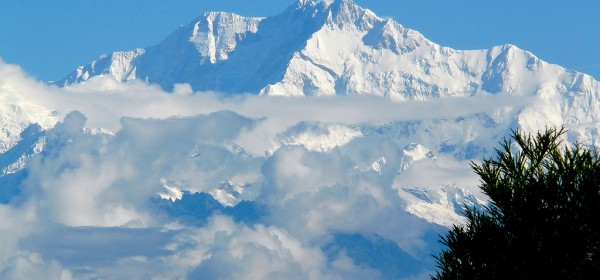
    Most individuals create a bucket list which consists of places to see and things to do before life is over. One of the most common areas added to a bucket list is the Himalayas. The wondrous mountain chain offers a variety of outdoor activities and beautiful scenery that is a must-see before you die. Most people do not have any idea what can be enjoyed in the Himalayas and it is important to learn the many recreational and beauty features of the area. Below are a few options for travel that include the Himalayas so you can enjoy this historic natural beauty.

    Gokyo Lakes

    Located in Sagarmatha National Park in Nepal, the Gokyo Lakes lay on an altitude of 15,400 to 16,400 feet above sea level. The lakes are a freshwater system and are the highest form of freshwater lakes on the planet. The waterfront consists of six main lakes with the largest being Thonak Lake. Certain religions consider the lakes to be of religious significance and when visiting the area you can wade into the waters, enjoy local wildlife or climb nearby Gokyo Ri. Take a look at the breathtaking view.

    Gokyo-Lakes


    Island Peak 

    Imja Tse is a mountain located in Eastern Nepal and known as Island Peak. This area is popular because it provides a difficult climb to the peak and can be an interesting way to see the Himalayas. When you begin a climb of Island Peak, you will start at a base camp which sits at close to 17,000 feet. You will then begin to climb in the early morning hours and then reach camps along the way. The climb is considered difficult when considering the steepness of the mountain.

    A-Island-Peak-view

    National Parks

    If you enjoy outdoor activities and want to consider camping or viewing the local wildlife, you will find the region of the Himalayas offer several National Parks. Travel to the Great Himalayan National Park or the Hemis National Park for unique views of the mountain range as well as a variety of outdoor activities.

    Mount Kailash

    Certain religions including Buddhism and Hinduism consider the region of the Himalayas a scared pilgrimage. There are several sites along the mountain range that are considered sacred, including Mount Kailash. You will find several temples that you can visit in the area where you may find a religious awakening or simply revel in the natural beauty of the area. Temples can be found in Tungnath, Kedarnath and Amarnath.

     Wildlife Sanctuaries

    A common feature of the Himalayas is the amazing wildlife. There are several wildlife sanctuaries available in the area that you can see mammals, birds, reptiles, mollusks and more. A trip to the Kugti Wildlife Sanctuary or the Fambong La Wild Life Sanctuary both can offer you interesting exhibits of animals and insects native to the area.

    These are just a few spots in the Himalayas that you can visit before you die. Consider the activities you enjoy so that you can plan a trip that will be a peaceful memory taking you into your final days or many years to come.

    Becky

    September 23, 2014
    Far Away Places
  • What is it like to take a Trans-Siberia Railway Trip?
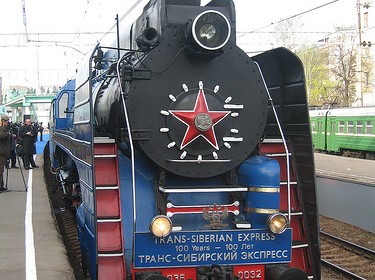
    What is it like to take a Trans-Siberia Railway Trip?

    Read on to learn more about what you might see on your journey with Trans-Siberian Railway.

    When travelling by rail between such diverse countries as China, Mongolia, and Russia, there is all sorts of historically unique architecture and natural scenery to observe.

    Here’s a sneak-peak of 5 of the travel highlights from riding with the Trans-Siberia Railway Company:

    1. The Great Wall of China

    wall of china

    The Great Wall of China is a quite the architectural feat, and spans 21,196 km from start to finish including its various limbs. It was originally intended to protect China and its early states from wars and small attacks, and later it also doubled as a trade corridor.

    Construction of the Great Wall of China spans a many hundreds of years, starting as early as 7th century BC, and went on for centuries before coming to an end during the Qing rule somewhere between 1644 and 1912.

    It is said that the Great Wall of China is so large that it can be seen from outer space!

    2. Beijing Olympic Stadium

    The Beijing Olympic Stadium was designed for use in the 2008 Summer Olympics and Paralympics.

    The design for the Olympic Stadium originated from the study of Chinese ceramics, and it implemented the use of steel beams in order to hide supports for the retractable roof—which gave the stadium an appearance of a bird’s nest.

    The Stadium has a capacity of 80,000 and a total of 140 Executive Suites.

    The design of this large stadium was accomplished jointly by Swiss architects Jacques Herzog, Pierre de Meuron, and Chinese architect Li Xinggang among others.

    The gross cost of the project was approximately 33 million dollars, and this massive stadium is spread over 258 thousand square metres.

    3. St. Basil’s Cathedral

    st basils

    Richly contrasted from the previous destination, this monument is steeped in rich history.

    Saint Basil’s Cathedral is also known as The Cathedral of Vasily the Blessed, the Cathedral of the Intercession of the Most Holy Theotokos on the Moat, and also as Pokrovsky Cathedral.

    It was built from 1555 to 1561, and as part of the program of state atheism, it was confiscated from the Russian Orthodox community, and converted into a museum in 1928.

    The cathedral has been part of the Moscow Kremlin and Red Square UNESCO World Heritage Site since 1990.

    The construction and design has no prior connection in Russian architecture, and nothing similar can be found in the entire millennium of Byzantine from the fifth to fifteenth century.

    4. The Cathedral of the Nativity of the Theotokos, in Suzdal Russia

    This cathedral too is a UNESCO World Heritage Site, and is one of the most complex monuments of Russian medieval architecture in existence.

    Its interior fresco paintings possess a 13th, 15th, and 17th century origin. The structure was originally built in 1102, restored in 1222, and some of its walls were converted to brick in 1528.

    Although this cathedral has endured many fires over the years, it is still a gorgeous piece of history to be preserved for future generations.

    5. The European Architecture of St. Petersburg

    Another wonderful sight to see along the Trans-Siberian Railway is the wide variety of European architecture distributed throughout St. Petersburg.

    St. Petersburg is often viewed as the “most western” of Russian cities, its origins built long ago by Swedish settlers. It is the northernmost city in the world, with a population of over 1 million people.

    Much like the other monuments and sights previously mentioned, the Historic Centre of Saint Petersburg and its related monuments make up a UNESCO World Heritage Site.

    St. Petersburg is a place with deep historical importance, and has been called the city of three revolutions. The oldest remaining building is a wooden house built for Peter I in 1703, on the shore of the Neva near Trinity Square.

    Today there are restrictions prohibiting tall buildings in the city centre to preserve the city’s historic skyline.

    Saint Petersburg has more than two hundred museums, spread throughout it and it is a mecca for history buffs. The largest of the museums is the Hermitage Museum, featuring interiors of the former imperial residence and an elabourate collection of art.

    Oh, there’s more

    We haven’t even begun to scratch the surface! These are only 5 examples of what you might expect during great adventures at Trans-Siberian tours with the Trans-Siberian Railway Company.

    Be sure to explore the trip planner on the company website in order to gain an even deeper understanding of every landmark that is possible to visit along your path.

    Accommodations

    There is an accommodation for every taste along your journey. You can stay in hotels, guest houses, resorts, various historical buildings, and even a Mongolian Ger!

    Be sure to let your travel advisor know just what you’re looking for prior to booking to ensure that you find what you’re looking for.

    There are many places to stay in St. Petersburg, Moscow, Ekaterinburg, Irkutsk, Lake Baikal, Ulan Ude, Vladivostok, Mongolia, Harbin, and Beijing and we’ll help you pick the right one.

    We can also arrange home stays, Ger camps, and traditional China style lodging.

    Becky

    September 7, 2014
    Far Away Places
Previous Page
1 … 27 28 29 30
Next Page

©2023 All rights reserved.

  • WordPress
  • Twitter
  • Facebook